
I have wonderful news: after five years of work, Notre-Dame de Paris reopened its doors on 8 December 2024. If you’re planning a trip to Paris, today you can once again step inside the cathedral and admire it restored, brighter than before.
And yet I still remember perfectly the afternoon of 15 April 2019, when along with the whole world I watched the terrible images of the fire at the cathedral of Paris. Living in the French capital, in those months many of you asked me for news about the damage and the rebuilding.
What really happened that day? And how did they manage to rebuild it so quickly?
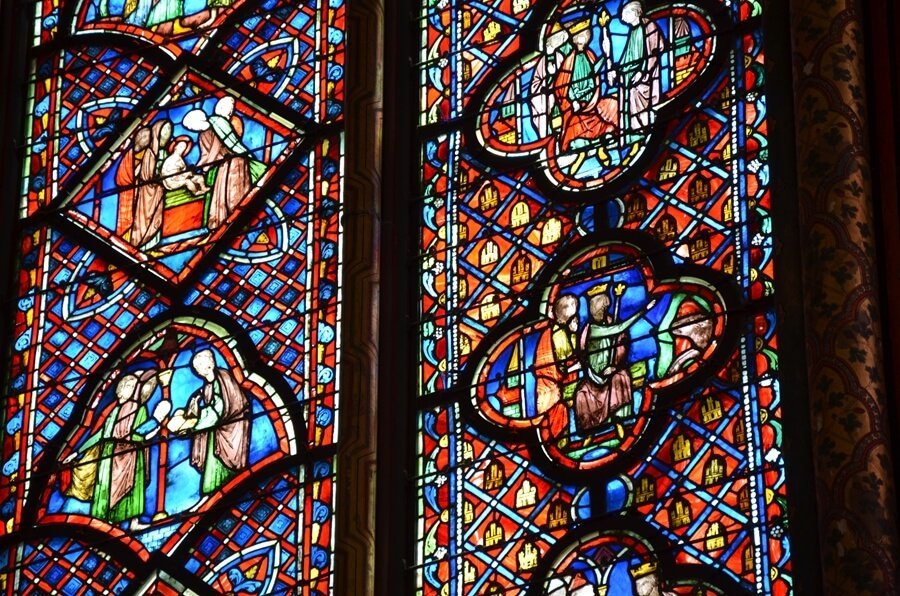
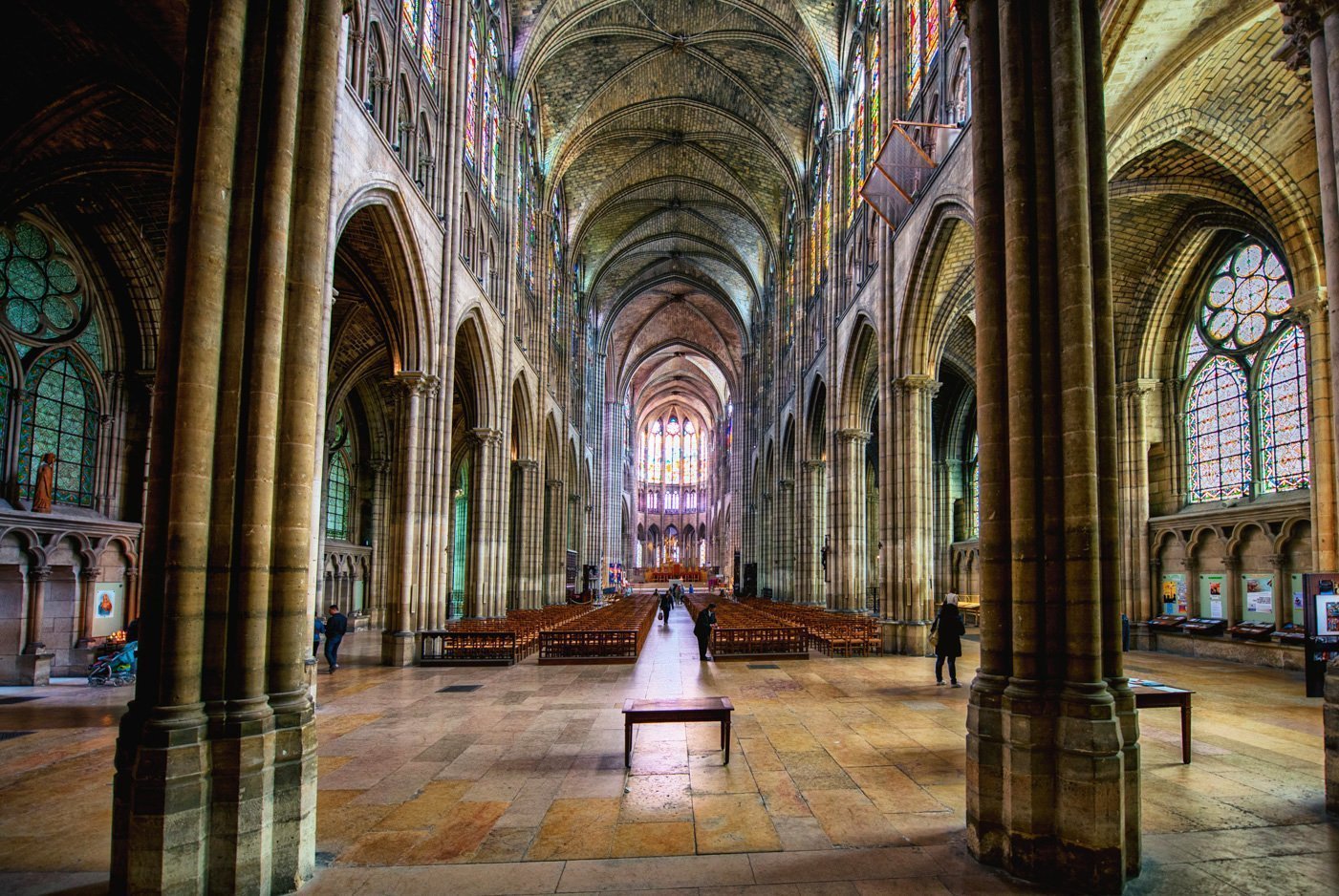
Nothing will ever replace the value of Notre-Dame, but for that very reason it’s worth understanding what was lost and what was saved. And if you love the churches of Paris, I also recommend the Sainte-Chapelle with its stained glass, the basilica of Saint-Denis and the other Gothic churches of the city.
Below I answer the 8 questions I’ve been asked most often about the Notre-Dame fire and its rebirth.
Let’s go!
1 – What caused the Notre-Dame fire
The French judicial investigation ruled out arson: it was an accident. A single, certain cause was never identified, but investigators traced it to the two most likely hypotheses: a short circuit in the electrical system or a cigarette left burning by the workers.
The Notre-Dame fire broke out in the roof area, where restoration work on the spire (by then blackened by pollution) had been under way for months.
You may be surprised to learn that, before 15 April 2019, the cathedral of Paris had never been hit by a fire, and that no one had ever brought electricity up to the roof precisely to ward off this danger.
The internal structure of the roof of Notre-Dame was in fact so intricate that installing modern fire-suppression systems was impossible. That is why only smoke sensors and alarms had been placed there, along with the constant presence of a few watchmen.
Unfortunately, it wasn’t enough.

2 – Why couldn’t the firefighters put it out straight away?
As I watched the first images of Notre-Dame in flames, the first thing I asked myself was:
“But where are the firefighters?”
It really looked as if the cathedral was burning with no one stepping in, didn’t it?
In fact the Paris firefighters did an exceptional job to avoid the worst, but the size of the church is enormous compared with the water delivered by hydrants. Moreover the ladders weren’t tall enough to reach the top, and the strong wind certainly didn’t help with aiming the jet.
The firefighters looked tiny against the sheer mass of the building, yet they did everything possible to save Notre-Dame from the flames, managing to rescue the façade and the towers.
But then why not use a water bomber or a helicopter?
I’m sure more than one person thought of this solution, which however wasn’t feasible for two reasons:
- Dropping cold water onto the red-hot stones would have caused very serious damage to the load-bearing structure of Notre-Dame.
- There was danger for the thousands of people gathered around the church.
So the only possible solution was chosen: fighting the fire from the ground and from inside, saving the structure stone by stone.
3 – Why was the fire so violent?
The speed with which the Notre-Dame fire spread led many to look for fanciful explanations, but the reality is simpler. The roof rested on about 1,300 huge oak beams. This gigantic structure had been raised around 1220 and supported the roof and the spire (the latter added in the 19th century, when the architect Viollet-le-Duc restored the cathedral).
Being a 13th-century work, the wood was by now very dry.
Consider that building a cathedral could take centuries, and that the timber came even from neighbouring regions: some of those beams were already many decades, or even centuries, old by the time they were placed on the roof of Notre-Dame.
It may seem incredible, but we’re talking about wood 800–900 years old, some beams even taken from older structures.
Have you ever tried setting fire to old wood? It burns fiercely and fast!
That’s why the Notre-Dame fire spread so violently. If you then add the strong wind of that day and the lead covering of the roof, the disaster was hard to contain.

4 – How frequent are cathedral fires?
Sadly, this kind of accident is far more frequent than you might imagine.
In 2018 alone, in Italy, there were two that I know of: the first at the Sacra di San Michele in Piedmont and the second at the parish church of Chiampo, near Vicenza. Both due to faults during roof works.
In Nantes, for the same reasons, the cathedral burned in 1972, and the list could sadly go on for a long time.
In the past these misfortunes were even more common: lighting depended on candles and heating on fireplaces, while safety systems were nothing like today’s. The slightest mistake could risk burning everything down.
For example?
The roof of the Cathedral of Pisa burned in 1595 in exactly the same way as on 15 April at Notre-Dame: during maintenance work, a worker probably left some tools burning, which set fire to the beams.
5 – What was the roof of Notre-Dame like?
The structure of the roof of Notre-Dame was long studied precisely because it was so extraordinary. It was nicknamed “the forest”, because stepping into the roof space felt like walking through a dense wood.
If you like numbers, it will astonish you to learn that the roof was made up of about 500 tonnes of wood and 250 tonnes of lead.
Wood is a precious material for the study of buildings: thanks to today’s tools, a tiny sample can tell us a great deal about its history. You can discover the weather conditions the tree lived through, the tools used to cut it, how it was laid, and so on.
But that’s not all.
Thanks to a special analysis called radiometric dating (the famous “carbon-14 method”, widely used in archaeology), it’s possible to work out with good accuracy the date the wood was cut. That’s why we know precisely the age of the beams destroyed in the Notre-Dame fire.

6 – What did we lose in the fire?
I don’t want to fuel sterile controversy, but anyone who says we lost nothing important is wrong.
First of all we lost the original beams of the church, medieval timber that could still tell us much about building techniques and about life in Europe in those centuries.
The damage to the structure, luckily, turned out to be more limited than feared. In the following days some engineers raised the alarm about the risk of a collapse of the vaults, damaged by the extreme temperatures and the heavy water jets; fortunately the cathedral was quickly secured with an imposing scaffolding and the vaults held.
Besides the beams, the fire also damaged ancient works and furnishings. Let’s see which ones.
7 – The works lost and the works saved
It’s hard to draw up a precise list of the works hit by the Notre-Dame fire, but it isn’t true that there was nothing old or important inside.
I’ve heard people say the church was nothing but a jumble of restorations, buildings and rebuildings. That’s true, but all old churches are: Notre-Dame was already sacked and damaged during the French Revolution, and yet it still holds objects of immense artistic and religious value.
Luckily, a great many treasures were saved: the cathedral’s treasury, the precious relic of the Crown of Thorns and the splendid stained-glass windows, all intact. Just think that even the copper statues decorating the spire had been removed for restoration just a few days before the fire.
But not everything was saved.
The great organ of Notre-Dame did not burn, but it was covered by a thick layer of toxic lead dust: it was therefore dismantled pipe by pipe, cleaned and reassembled in time for the reopening. The Pietà by Nicolas Coustou on the high altar and many sculptures were saved, while the large canvases required long restorations.
A curiosity: the Crown of Thorns, after being rescued, returned to Notre-Dame with the reopening of December 2024, and today it is shown to the faithful every Friday.
8 – The rebuilding and reopening of Notre-Dame
At first there was talk of rebuilding the spire in a modern, different way, perhaps with a contemporary architectural gesture. In the end the choice prevailed to rebuild everything “as it was, where it was”: Viollet-le-Duc’s spire was rebuilt identically and the “forest” of oak beams was reconstructed using medieval carpentry techniques, felling more than a thousand oaks across France.
The paradox is worth noting: the choice was to rebuild identically a spire that was not the medieval original, but the 19th-century idea of how it ought to look. It is the same knot that at Carcassonne has been argued over for a century and a half, where Viollet-le-Duc roofed the towers in slate in a region of flat tiles.
President Emmanuel Macron had set himself an extremely ambitious goal: to reopen the cathedral in five years. Many thought it was impossible, and yet the target was hit: Notre-Dame reopened on 7–8 December 2024, with a great ceremony and an inaugural mass.
The credit also goes to an extraordinary mobilisation: the day after the fire a worldwide fundraising campaign began, which collected about €846 million. The restoration cost around €700 million, and the surplus will be used for a third phase of works on the façades, the flying buttresses and the choir.
And now?
Today you can once again visit Notre-Dame de Paris, and entry to the cathedral is free (in peak periods it’s best to book a timed slot online). If you want to really understand what happened, between fire and rebirth, I recommend a guided tour of the Île de la Cité with entry to the archaeological crypt beneath the square.
Notre-Dame is a heritage of history and art that belongs to everyone, not just to France. And seeing it standing again, after those images of 2019, is an emotion worth the journey.