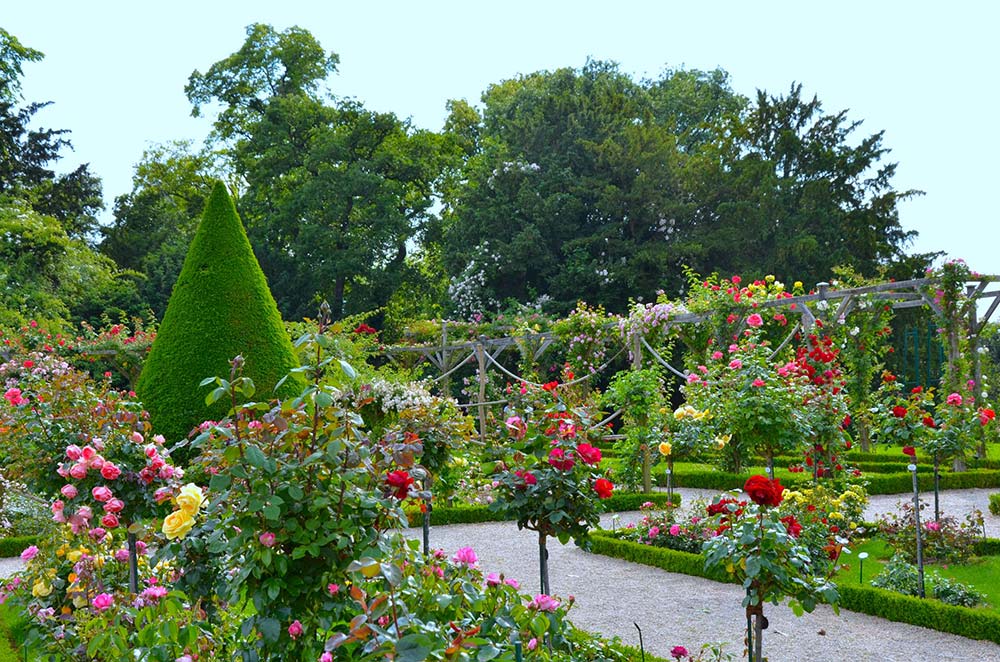

The magnificent Bagatelle rose garden in Paris lies not far from the historic centre of the French capital, inside the Bois de Boulogne. It’s a true oasis of peace that fills your eyes with beauty and your soul with scents.
Although it isn’t very well connected by metro, this little corner of paradise repays every effort.
The rose garden of Paris is the ideal place for lovers of flowers and roses. If you too, every year, can’t wait for spring to arrive, the Bagatelle rose garden is not to be missed!
And if you like it, don’t miss the Albert-Kahn Japanese garden either: I highly recommend it!
Let’s go!
The history of the Bagatelle rose garden: a record-breaking château
The story of Bagatelle is born of a bet between two figures of the French nobility.
The estate began to take the shape it has today during the reign of Louis XVI, when it was bought by his younger brother, the Count of Artois (the future Charles X). When Queen Marie-Antoinette visited the domain, she challenged him to rebuild the château before her return from a journey, just a few weeks later, wagering a hundred thousand livres that he wouldn’t manage it.
And how did it turn out?
The count entrusted the project to the architect François-Joseph Bélanger, who drew up the plans in two days; then nine hundred workers laboured day and night and the château was thrown up in just 64 days. It cost a fortune, but it was ready for the queen’s return.
Bagatelle thus won the bet, and ever since it has earned the nickname of “folie”, the little pleasure houses of 18th-century France. The surrounding park was entrusted to the Scottish gardener Thomas Blaikie, who designed it in the Anglo-Chinese style, very fashionable at the time.
Sadly the French Revolution interrupted this place’s gallant vocation, but not for long.
The Bagatelle rose garden after the French Revolution
In 1835 the estate passed to a wealthy Englishman, the Marquess of Hertford, who transformed the gardens in the romantic fashion, enriching them with walks and picturesque views.
But what about the rose garden itself?
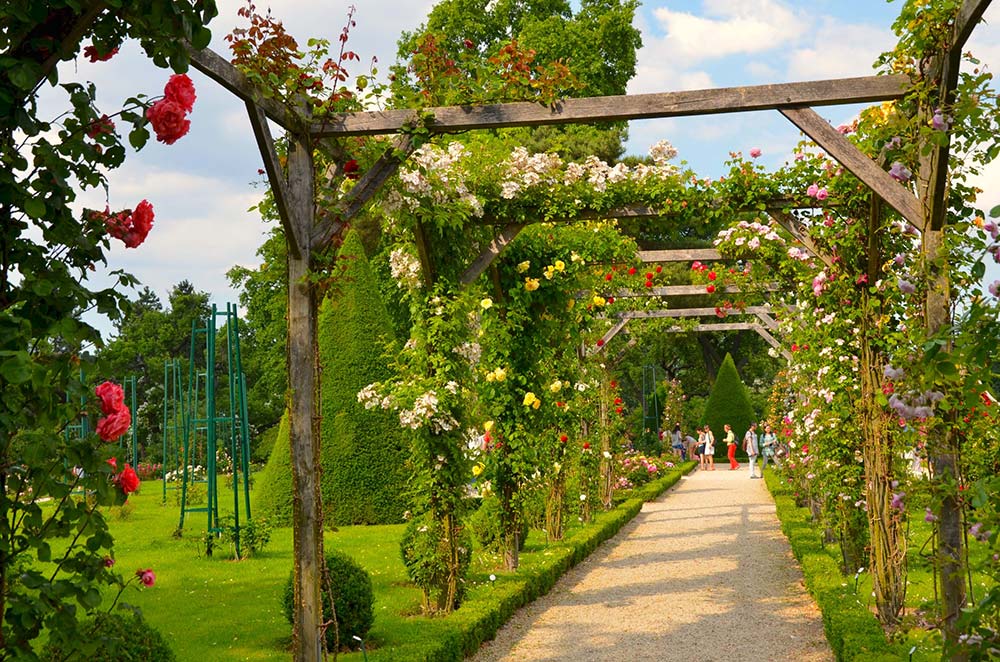
That came later. In 1905 the City of Paris bought the estate and made it public, entrusting its layout to the city’s gardens conservator, Jean-Claude Nicolas Forestier, who created the famous roseraie here: today it counts around 10,000 roses of over 1,200 varieties.
A fun fact: since 1907 Bagatelle has hosted the International Competition for New Roses every year, the first of its kind in the world and still one of the most prestigious. The roses awarded here go on to travel around rose gardens all over the planet.
Today the Bagatelle rose garden sits within the Bois de Boulogne, the largest park in the French capital.
What to see at the rose garden of Paris
Despite the name, the Bagatelle rose garden doesn’t have only roses.
The garden offers various walks, little waterfalls, ponds, a botanical garden and large lawns where you can stretch out and enjoy the beautiful spring days.
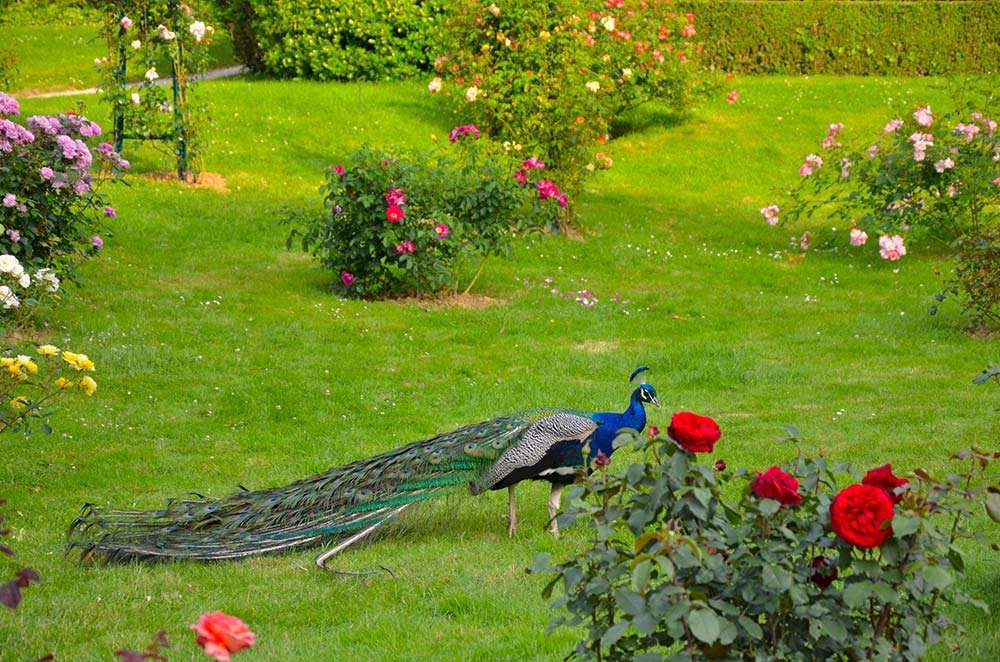
Along its avenues you’ll come across hares, peacocks, ducks and cats strolling about undisturbed, making the setting even more pleasant.
What’s more, the old pavilions and the château host temporary exhibitions and events of various kinds.

Practical information for visiting Bagatelle
How to get there. To reach Bagatelle from Paris you can take bus 244 from Porte Maillot (reachable by metro line 1 or by RER C) and get off at the “Bagatelle – Pré-Catelan” stop. I’d advise against lingering in the evening: after sunset the Bois de Boulogne changes atmosphere and isn’t the most pleasant place for a walk.
Tickets and hours. From early October to the end of March entry is free; from April to September, at the height of the bloom, there’s a small ticket: €2.70 full, €1.55 reduced, free for under-7s (checked in August 2026). Hours follow the seasons: from 9:30 am until 5:00 pm in winter, 6:30 pm in spring and autumn, 8:00 pm in summer.
Are you a lover of flowers and calm like me? Then you’ll also fall for the Albert-Kahn Japanese garden and the peaceful Place des Vosges, two more green corners of Paris that I adore.