
Are you travelling to Portugal and looking for information on what to see in Lisbon?
Well, in this post I’ll tell you about my experience, plus a few tricks for visiting the most beautiful and interesting museums in Lisbon.
But first I have to tell you something!
Yes, because to tell you the truth, the museums of Lisbon left me a little puzzled. Most of them are very small, and the number of rooms is rather limited.
While this might throw you off at first, it’s actually a good thing, because it lets you visit them quickly. Sometimes I’m rather intimidated by the big museums like the Louvre in Paris, the Vatican Museums or the Capitoline Museums, because there are so many beautiful things to see that, at a certain point, I no longer know where to look.
In Lisbon, however, the various masterpieces are scattered among different museums so, to see them all, you have to do a little tour and you’ll need some time. But this means you can focus only on the works that really interest you, and carefully choose only the Lisbon museums you truly want to visit.
Obviously the quality of the works on display is very high, and these rooms hold some splendid masterpieces.
But which are the most interesting museums in Lisbon?
I’ll tell you soon!
Let’s go!
A few tips for visiting the museums of Lisbon
If you want to visit the museums of Lisbon and save money, I recommend the Lisboa Card, the city’s official tourist card. It gives you free entry to more than 50 museums and monuments (from the Jerónimos Monastery to the Belém Tower), discounts on many other attractions and, very handily, unlimited public transport on the metro, buses, trams and lifts. You can buy it online or pick it up at the tourist office in the centre, near Praça do Comércio.
I recommend it because it comes in 24, 48 or 72-hour versions and, if you plan even just two or three visits plus getting around the city, it pays for itself quickly.
But here’s another tip that will be useful to you!
As I told you, the Lisbon museums are rather small. Unfortunately this greatly affects the quality of the visit, because at certain times of the year they get very crowded. My advice, therefore, is to take advantage of the morning opening at 10:00.
I know, waking up early to visit a museum isn’t exactly at the top of the list of things to do on holiday. But if you can, try to be among the first visitors of the day: you’ll avoid the crowds and the stress!
Finally, you should know that you can buy several combined tickets for the Lisbon museums, such as for the Jerónimos Monastery, the archaeological museum and the Belém Tower. Obviously this tip only makes sense if you feel like visiting all three, but I always look for combined formulas for more monuments and museums where possible.
Well, now let’s start figuring out which are the Lisbon museums to visit and why, beginning with the largest in all of Portugal!
1 – Museum of ancient art in Lisbon
If you’re planning a tour of the museums of Lisbon, you’ll surely want to start from the largest museum in Portugal, the Museu Nacional de Arte Antiga (MNAA), located right on the road to Belém.
The palace that houses this important Lisbon museum is called the house with the green windows (Casa das Janelas Verdes) and is particularly important for one specific reason. It is indeed here that the Marquis of Pombal, one of the most influential figures in Portuguese history, once lived.
Despite this, the exterior of the National Museum of Ancient Art will seem rather austere to you and, to be honest, even a bit ugly.
But don’t be fooled!
As had already happened to me at the Gallo-Roman Museum in Lyon, the beauty of this place is entirely within its walls.
Inside you can discover the most important art collection in Portugal, with over 40,000 works ranging from the Middle Ages to the 19th century.
But what’s there to see?
The part I liked the most is definitely the beautiful picture gallery. Here you’ll find not only works by Portuguese artists but also masterpieces by Dürer, Raphael and Bosch, including the famous triptych depicting the Temptations of Saint Anthony. There’s also a splendid panel by Piero della Francesca.
Absolutely not to be missed!
Inside this museum of Lisbon there is also a series of folding screens from Japan (the so-called namban screens) showing the arrival of the Portuguese caravels. They’re especially interesting because they express a different point of view than usual, in which the Portuguese are seen as barbarians, rather shabby.
And the Portuguese works, is there anything beautiful to discover?
Absolutely, do not miss the Saint Vincent Panels (Painéis de São Vicente) by Nuno Gonçalves, court painter to King Afonso V. It’s a true masterpiece of fifteenth-century Portuguese art: a “group portrait” of 58 figures gathered around Saint Vincent, a unique work in European painting of the time.
But there’s more!
Yes, because as the great explorers they were, the Portuguese had the chance to encounter a vast number of cultures. Precisely for this reason, on the ground floor of the Museum of Ancient Art, there is an entire section dedicated to handicrafts from Africa and the East.
Here is some practical information!
Like most Lisbon museums it is closed on Mondays; on the other days the opening times are from 10:00 to 18:00 (with an afternoon opening on Tuesdays).
⚠️ Careful, because this changes everything: the museum is closed. It shut to the public on 29 September 2025 for the works of the national recovery plan, which are redoing the roof and façades and restoring the Saint Vincent Panels themselves. Reopening is announced for the second half of 2026, but in August 2026, when I checked, it had not happened yet and there is no confirmed date. Before putting the museum in your plans, check the official site: when it reopens, the Panels will be restored.

2 – The archaeological museums of Lisbon: Museu do Teatro Romano
Like most European capitals, Lisbon’s past also has ancient roots that reach all the way to the Roman Empire. So you won’t be surprised to learn that, within the city, you’ll find numerous archaeological museums.
For example?
Well, I tell you about a few of them in my guide on what to do in Lisbon. Here, instead, I want to introduce you to a really special museum, centred on the remains of the Roman theatre of Lisbon.
It’s called the Museu do Teatro Romano and, in its current form, it opened to the public on 30 September 2015.
The interior is surprisingly modern and will show you the different excavation techniques, as well as some curiosities about the famous Lisbon earthquake of 1755. Perhaps it seems trivial to you, but because of the earthquake not only was the city almost completely razed to the ground: that event also marked a setback for Portugal’s colonial policy.
But that’s not all!
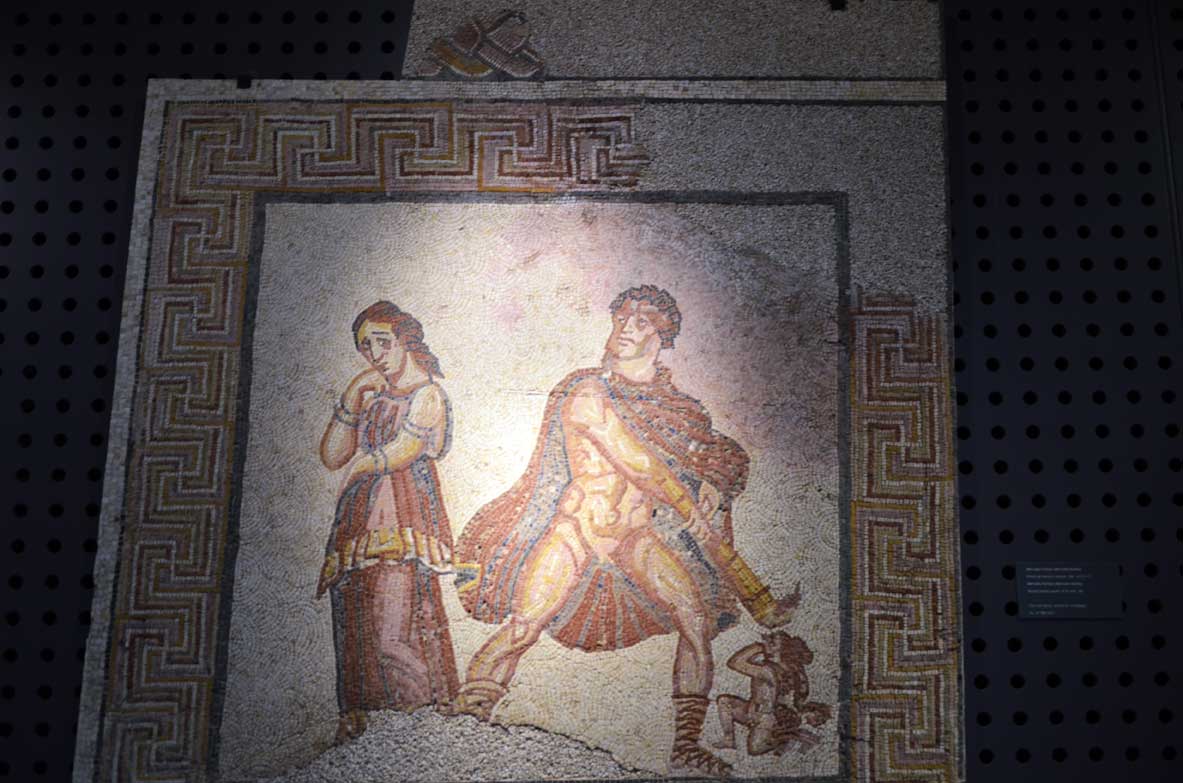
One of the most interesting things about this museum in Lisbon is discovering how the Romans built in this part of the empire. You can also see a stretch of the original pavement of Roman Lisbon, really not to be missed.
And what about the Roman theatre of Lisbon?
This is certainly one of the most fascinating things about the museum. Construction work began under the reign of Augustus, in the first century AD.
A curious fact: the theatre was later renovated in 57 AD, in the time of Emperor Nero, as recorded by an inscription found on the wall of the proscenium. It’s estimated it could hold up to 4,000 spectators.
One of the most surprising things about this structure, though, is its history.
The Roman theatre of Lisbon was in fact abandoned in the fourth century and lay buried for centuries, to be rediscovered by chance in 1798, during the works to rebuild the city after the earthquake.
This event was, at the same time, both a fortune and a misfortune.
The fortune is that the discovery gave us back an extraordinary monument in the heart of the city. The misfortune is that, during the decades of reconstruction, much of the ruins were used as a stone quarry to rebuild Lisbon: which is also why so little has come down to us intact.
What do you say, did I convince you to visit this corner of the city?
If you need an extra incentive, the ticket costs €4, a more than reasonable price, with reductions for ages 13-25, students and Lisbon residents over 65. It is open Tuesday to Sunday, 10-18, and closed on Mondays (checked in August 2026).
3 – Lisbon Azulejos Museum
If you don’t have time to visit all the museums in Lisbon, one of those you really shouldn’t miss is the splendid azulejos museum, which takes its name from the typical traditional ceramics of Portugal.
The first reason has to do with the place that hosts it!
The azulejos museum in Lisbon is in fact located inside a 16th-century convent, built in the Manueline style like the famous Convento do Cristo. It is the Madre de Deus convent, founded in 1509 by Queen Leonor, and the exhibition halls are arranged all around the beautiful central cloister. The interior is a real haven of peace, so much so that you won’t even feel like you’re in the city.
The second reason concerns the display of azulejos.
This very particular art is deeply linked to Portugal. These are glazed tiles, often in shades of white and blue, apparently very simple, but probably one of the most famous forms of popular art in this country.
If you look closely, you’ll find them practically everywhere, from the decorations of the most important buildings to ordinary city houses.
You’re in love, aren’t you?
Well, at the Museu Nacional do Azulejo you’ll discover how this form of painting was born and how it evolved over the centuries, as well as the rarest and most beautiful pieces.
Here’s what not to miss!
The most beautiful work in the museum is the famous Grande Panorama de Lisboa. It’s an azulejo panel about 23 metres long that faithfully depicts the city’s waterfront. The most interesting thing is that the work, dating to around 1700, predates the terrible earthquake I told you about: it is therefore an important record for discovering what Lisbon looked like before the earthquake.
But here’s a curiosity!
The art of azulejos didn’t come out of nowhere. The technique arrived in Portugal at the beginning of the 16th century, when King Manuel I, struck by the decorations he had seen in Seville and at the Alhambra in Granada, had these Hispano-Moorish tiles imported. At first they were simple geometric motifs, because the Islamic religion forbade the depiction of human figures; only later, freed from that constraint, did the Portuguese begin to portray people, animals and entire historical scenes, reaching their peak with Art Nouveau.
⚠️ This museum is closed too, since November 2025, for a 4.9-million-euro job on the façades, bell tower and cloister. Here as well reopening is expected in the second half of 2026 and in August 2026 there was still no date: the notice is on the museum’s home page, which meanwhile keeps only the shop open, at the Palácio Foz.

4 – Lisbon Gulbenkian Museum
The Gulbenkian is one of those museums in Lisbon that, unfortunately, I didn’t have time to see during my trip to Portugal. Despite an exhausting dash to get there, I arrived right at the box office’s closing time and they wouldn’t let me in.
Such a pity.
But then, why do I recommend it?
Simple: it’s perhaps the only museum in Lisbon that can compete with the Museum of Ancient Art in terms of quality and the number of works it holds!
Inside is kept the entire private collection of Mr Calouste Gulbenkian, a wealthy Armenian oil magnate who decided to move to Lisbon during the Second World War. The man was so rich that he began to accumulate works of art of great rarity and beauty, from the artefacts of ancient Egypt and Greece to the European Renaissance, without neglecting even objects of Eastern and Islamic art.
What he created is simply one of the most beautiful and important private collections in the world!
But what to see?
If I really must recommend some works, don’t forget to look for Rembrandt’s Portrait of an Old Man (1645) and the beautiful sculpture of Diana by Jean-Antoine Houdon, made in 1780 and later part of none other than the collection of Catherine II of Russia.
But not only that.
Yes, because the entire collection has a truly staggering number of works: think that there are more than 6,000 of them, including masterpieces by Rembrandt, Rubens, Manet and Degas, as well as the beautiful unique Art Nouveau pieces you’ll fall in love with.
Let me give you a piece of advice!
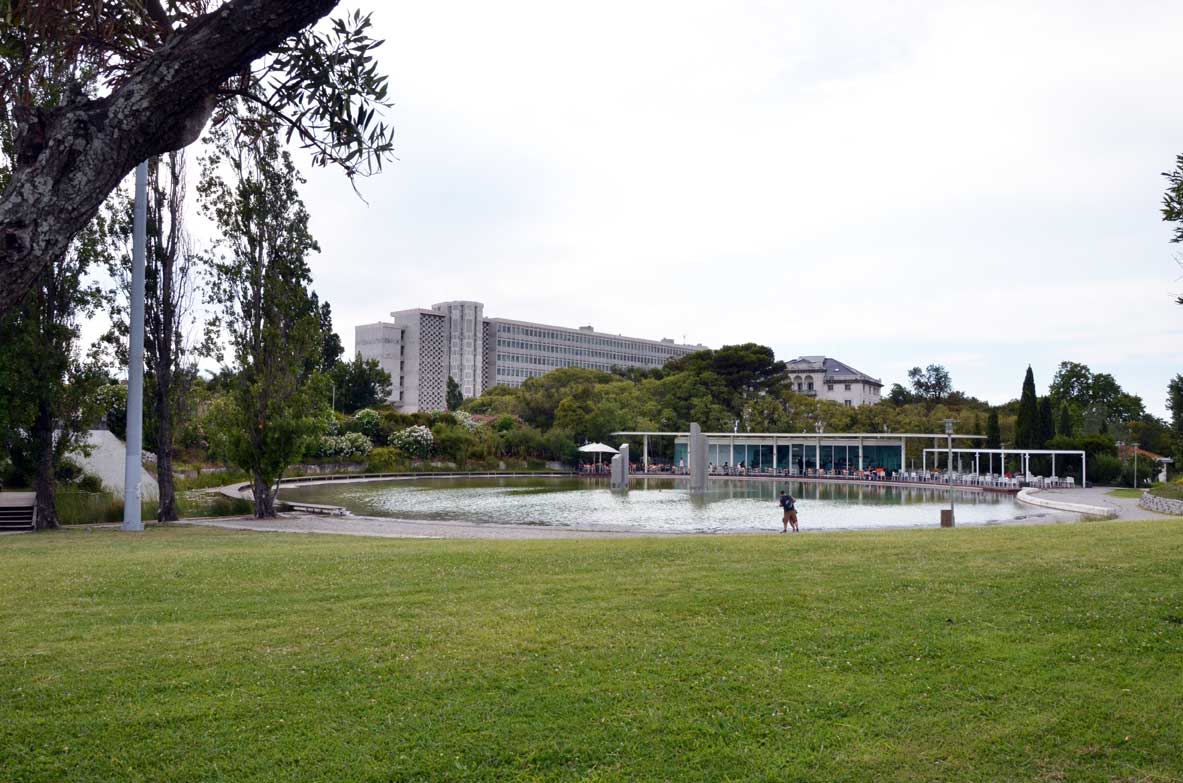
I suggest you take advantage of your visit to the Gulbenkian Museum also to have a lunch break in its lovely gardens with ponds. I assure you they are the ideal place to recover after the endless walks in the centre of Lisbon.
Good news, on the other hand, for the Gulbenkian: after a year and a half of works it reopened on 18 July 2026, with the Founder’s Collection rehung and around a thousand pieces on show in the main gallery. The ticket costs €10, dropping to €6 for ages 12 to 29 and €9 for over 65s, free under 12 and free every Sunday after 2 p.m. (checked in August 2026).
To get there, there are several buses, but I recommend the metro, S. Sebastião or Praça de Espanha stops. Unlike the other Lisbon museums, the Gulbenkian is closed on Tuesdays, while on the other days it is open from 10:00 to 18:00.

5 – Museu Nacional de Arte Contemporânea do Chiado
The Museu Nacional de Arte Contemporânea do Chiado is really special, because it is located inside an ancient Franciscan convent (the convent of São Francisco da Cidade), whose origins date back to the 13th century.
Located in one of the historic districts of Lisbon, the Chiado Museum holds works from 1850 to the present day, with masterpieces ranging from sculpture to painting to drawing.
This museum is also interesting for another reason!
In 1988, in fact, the neighbourhood where it stands was the victim of a terrible fire (the famous Chiado fire) that also damaged the convent. I know what you’re thinking: in Lisbon they can’t be particularly lucky.
Because of this incident, the Contemporary Art Museum of Lisbon was reopened only in 1994, with several modern modifications designed by the French architect Jean-Michel Wilmotte.
The best part is that the restructuring of the complex is not at all invasive: on the contrary, it faithfully reflects the monastic lines of the convent, while reinterpreting them in a modern style.
Want to know what to see inside?
As I explained, most of the modern works of Portuguese art are kept here. The most beautiful are perhaps the landscapes of João Cristino da Silva (look for his famous canvas Five Artists in Sintra), but you’ll also find many masterpieces of Symbolist and Surrealist art.
In short, if you’re a lover of modern art, this is just the place for you.
If I’ve convinced you to visit it, the Chiado Museum is closed on Mondays and open Tuesday to Sunday from 10 to 18, with last entry at 17.30; the ticket costs €10, with 50% off for over 65s and for the 13-24 bracket. Part of the space is temporarily closed for works (checked in August 2026).
Before you go
In Lisbon there are of course many other interesting museums, such as the characteristic Museu Nacional dos Coches (the coach museum) or the Berardo Collection, home to one of the most important collections of contemporary art in the world. But if you’re short on time, the five I’ve told you about are an excellent starting point.
And if you want to plan the rest of your stay, I’m waiting for you in my guide on what to do in Lisbon and in the one dedicated to Sintra, the fairytale town just a stone’s throw from the capital.